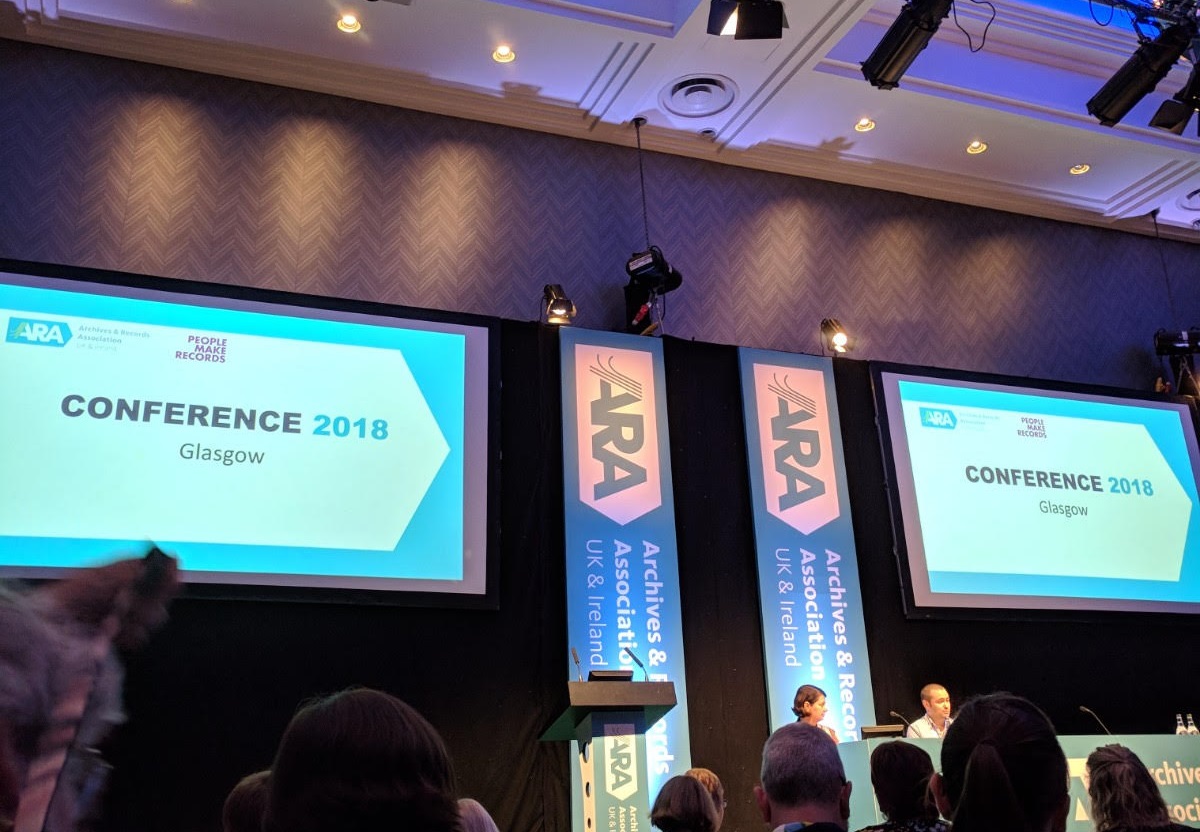
On 3-4 November, I attended a two-day event at the British Library that highlighted the challenges and approaches of collecting materials created during times of war, conflict and crises. Through a series of panels and discussions, museum and library professionals, researchers and private collectors shared examples of incredible historical and contemporary initiatives to preserve diverse materials and heritage sites at risk of loss, decay or destruction.
Having recently worked on the joint Bodleian Libraries and History of Science Museum Collecting COVID project, I was particularly interested in contemporary programmes of collecting. Our project, which ran from 2021-2023, aimed to acquire and preserve the University of Oxford’s research response to the COVID-19 pandemic. It enabled us to capture, catalogue and publish over ninety oral history interviews.
Modern collections/initiatives showcased included:
Web Archiving the COVID-19 pandemic, Nicola Bingham, British Library
Coastal Connections (heritage sites at threat from coastal erosion) Dr Alex Kent, World Monuments Fund)
Endangered Archives Programme (recent case studies include Ukraine, Gaza and Sudan) Dr Sam van Schaik, British Library
Collecting Human Stories during the war in Ukraine, Natalia Yemchenko, Rinat Akhmetov Foundation/Museum of Civilian Voices
Rapid collecting is a means to collect documentary evidence, preserve cultural memories and commemorate events. By providing access to these collections, institutions are then able to build a body of evidence and facilitate research. I was struck by the similarities between modern initiatives and those that had taken place a century before. Some of the contemporary examples of collections crowdsourcing harked back to the collecting of ephemera during the First World War. Dr Ann-Marie Foster highlighted the Bond of Sacrifice Collection and Women’s Work Collection (Imperial War Museums) in her presentation with Alison Bailey, in which families sent items memorialising loved ones, as examples of early collecting initiatives. Modern rapid collecting work has meant that contemporary archivists/curators have taken up this tradition, working actively to save materials at risk of loss through intentional selection.
As well as crowdsourcing and outreach, other strategies institutions draw upon in an increasingly online world are web archiving, digitisation and digital preservation. With social media now a main mode of communication for millions, web archiving is a useful tool to preserve and present online response to global events. Work to capture websites relating to recent events is ongoing at both the Bodleian Libraries and British Library. I found Archive-It to be an incredibly useful tool to capture and publish a range of web pages (including the social media pages of COVID-19 researchers, given with permission) for our project, which without reactive selection and preservation, would otherwise have been at risk of loss.
Overall, the event highlighted that institutions must use active strategies towards preserving at-risk materials created during ongoing crises and conflicts, including:
Involving communities to assist in selection of materials;
Providing as representative a view of the event as possible (capturing diverse perspectives);
Providing access to collections and making them available as widely as possible (ethical considerations and sensitivities permitting);
Democratising collections and preserving them for future generations.
The Digital Archivist Trainees had the opportunity to attend the “Copy that Floppy” workshop organised by the Cambridge Future Nostalgia team on October 9, which provided an introduction to floppy disk imaging for digital archivists and digital preservation practitioners. This blog post outlines some of the key takeaways from our experience, and a full guide to floppy disk imaging produced by Future Nostalgia can be found here.
A floppy disk is a type of media which stores data on a magnetic-coated soft plastic disk in a hard plastic case. Popular in the 1970s–1990s, floppy disks come in several sizes: 8-inch, 5.25-inch, 3.5-inch, and sometimes 3-inch. While the number of 8-inch and 5.25-inch floppy disks sold in this period remained relatively stable, the number of 3.5-inch floppy disks sold rose dramatically in the 1990s. The Future Nostalgia team predicts that there will be a significant rise in the number of 3.5-inch disks in future accessions, and therefore creating the capacity to image 3.5-inch disks in particular before this influx should be a priority.
Workstation equipment including a floppy disk drive, ribbon cable, controller, 3.5-inch high density disk, and a power cable. Photo by Leontien Talboom.
Early floppy disks came in single-sided and double-sided formats, meaning that data could be reliably written on only one or both sides of the disks. It is also important to try to identify the “density”, or the way the disk was encoded and magnetised, as this affects how the disk can be read. 3.5-inch double density disks have a hole only in one corner, whereas 3.5-inch high density disks often have two. 5.25-inch disks are more difficult to identify as double or high density, and 8-inch disks are also sometimes single density. The disk manufacturer and type of computer used to write data can also affect the way the disk can be read (e.g., Mac data can be difficult to read on a non-Mac system and vice versa). Common disk manufacturers included Apple, Amstrad, and IBM.
Floppy disk drives that are compatible with the various sizes of floppy disks can be used with a “controller” to read disks on a modern computer. A controller is a piece of hardware that manages the connection between the disk drive and the modern machine, and crucially, it can read “flux-level data” from the disk. (Some 3.5-inch disks can also be read with a USB floppy drive, but these drives cannot read flux-level data, which can help recover some information when a disk is damaged or degraded.) In the workshop, we used a “Greaseweazle”, which is the most commonly used floppy disk controller, that runs with a Python package of the same name.
In teams, we each assembled a workstation to read various sizes of floppy disks. The Future Nostalgia team provided drives, controllers, and cables, as well as some test disks and workshop participants also brought in their own disks that they had been hoping to read. Excitingly, one member of my team brought in a stack of 3-inch Amstrad floppy disks which tend to be rarer than their 3.5-inch counterparts. We used a 26- to 34-pin ribbon cable to connect the 3-inch drive to our controller and a USB-C cable to connect the controller to a PC. The Amstrad drive also required us to use a flipped power cable compatible with an Amstrad drive to connect to an external 12V power source. Luckily, the expert at our table warned us this was necessary―a regular power cable or a power connection directly to the 5V-compatible Greaseweazle would’ve fried the drive or the board!
Setting up a workstation to image 3-inch Amstrad disks.
Despite everything being connected in a way that should have worked, the Greaseweazle software returned unexpected errors when trying to read the disk. Floppy disk drives and cables are fickle and will sometimes work or not work in the same set-up―it’s worth taking things apart, putting them back together, and trying again. Eventually, we discovered that the controller was unhappy with its connection to the ribbon cable and we had to instead connect it to a different port on the same cable. When that was done, the Greaseweazle was satisfied and we were able to image some Amstrad floppy disks! The first step was to take a flux image of the disk and view it using an emulator. From this flux image we were able to tell whether the disk was damaged (fortunately it was in good shape!) and how many tracks were stored on it. We then were able to convert the raw flux image data into a disk image, and extract some of the text files saved on the disk. It turned out that the stack of 3-inch disks contained research notes and bibliographies compiled by an historian of Anglo-Saxon history from whose archive they came.
My colleague Evie’s team ran into one of the most interesting cases of the day, which amassed a small crowd of practitioners looking over her shoulder while she was imaging a disk. Curiously, the flux image kept returning data for only one side of the double-sided disk. The suspicion that we left with was that the user had first written the disk using both sides of a double-sided drive, but had later overwritten data on only one side by using a single-sided drive. Unfortunately, that meant that the oldest data was lost―but it generated a lot of speculation as to how to go about recovering as much as possible. Floppy disks are complicated, and they and the machines needed to read and write them were expensive. Users found creative ways to reuse and reformat disks, which means that sometimes manufacturers’ labels are misleading when imaging disks today. The Future Nostalgia team estimated that they have success imaging disks about 50% of the time due to degradation or damage, so it was an authentic experience not to get complete data off of all of the disks we saw.
Evie copying some floppies! Photo by Mark Box.
This workshop was a fantastic crash course into floppy disk imaging, and many thanks to the Future Nostalgia team for inviting us along!
To commemorate the centenary of Franz Kafka’s death on 3 June 1924, the University of Oxford’s summer-long cultural festival Kafka24, inspired by Kafka’s life and work, features theatre, music, cabaret, exhibitions, lectures, talks, and free family activities including the spectacular Jitterbug Tent which will land in University Parks on South Parks Road from Friday 31st May to Sunday 2nd June, and insect activities at the Museum of Natural History on the evening of 5th June.
On the evening of 3rd June, the Bodleian Libraries will host Oxford Reads Kafka in the historic Sheldonian Theatre, a public reading of Kafka’s story ‘Metamorphosis’ in which the hapless Gregor Samsa wakes up to find he’s transformed into a bug, with readers including authors Lemn Sissay, Ben Okri, and Lisa Appignanesi (tickets available online).
And on 30 May the major exhibition Kafka: Making of an Icon, featuring manuscripts from the Bodleian Library’s Kafka archive, opens in the ST Lee Gallery of the Weston Library (free admission).
This weekend, the city of Oxford is celebrating the anniversary of Roger Bannister’s historic sub-four-minute mile, a world record that the former Oxford (Exeter College) student broke at Oxford’s Iffley Road athletic track, 70 years ago on 6 May 1954.
In the Weston Library’s Blackwell Hall, from now until 5pm on 6 May, you will find a small display from his archive, which is now housed at the Bodleian, featuring the event programme for his world record race, original photographs, objects from his athletic career, and letters and papers that reveal his meticulous training.
Meanwhile runners across the city are invited to join the Bannister Community Mile on Monday 6 May, running from St Aldate’s to the Iffley Road Track where they will be able to enjoy the Mile Fair with more historic displays, and throughout the day, Bannister Track Mile races from invited athletes of all ages, which from 6pm will feature elite racers attempting to break the current mile records.
Moss Side, Manchester, spring of 1972. On a sunny day, a group of children gather round an old barber’s shop, set into a row of single-storey Victorian buildings. They jostle for space as they peer at photographs on display in the window. The eldest among them holds up a toddler on their hip—perhaps a sibling, relation, or friend—to better see the photographs. To their left, outside the shop next door, stands a rack of second-hand clothes for sale. To the right is Jimmy Thomson’s Tattoo Parlour. Three teenage girls stand outside the tattoo shop, watching the flurry of activity. [1]
Moss Side covers just 1.84 square kilometres of Manchester, pushing up against Hulme to the north and Whalley Range to the south. [2]. In the 1950s, this neighbourhood became home to a small but growing Caribbean population, early arrivals of what is now known as the Windrush Generation. In the 1950s and 60s, many Caribbean people chose to move to Manchester where they knew others, family or friends, or if they had been stationed in nearby Lancashire during the war. Settling in and around Moss Side, a Caribbean community soon laid down roots in the neighbourhood. [3]. In the 1950s, Caribbean people made up the second-largest ethnic group in Manchester after white British people and by 1981 there were over 6,000 people from the Caribbean living in the city. These people came predominantly from Jamaica, but there were other from countries such as Barbados, Trinidad and Tobago, and what was then known as the West Indies Associated States. [4].
Moss Side has long been stigmatised as an ‘inner-city problem area.’ [5]. In 1981, protests against racist and aggressive policing tactics in Moss Side turned into violent clashes lasting two nights, further consolidating the view of the neighbourhood as a site of violence and crime. This followed similar events in Brixton, Toxteth and Handsworth, caused by high unemployment, poor housing provision, a lack of investment, and racial tensions. [6]. However, photographs of Moss Side held in the Bodleian Libraries Special Collections show a very different story. Taken almost a decade before the disturbances of 1981, but twenty years after the first arrivals from the Caribbean, they are a window into the daily life of this deprived, but neighbourly area.
The shop described above, around which the children gathered to peek at photographs in the window, was the Free Photographic Shop, which had been set up by a photography student at Manchester Polytechnic called Daniel Meadows. Hailing from rural Gloucestershire, Meadows came to Manchester in 1970 and lived in Moss Side. In January 1972 he rented a barbershop at 79b Greame Street, converting it into a photographic studio in which local people could have their picture taken free of charge. Once developed, Meadows’ subjects received a copy of their photograph to keep. [7]. The studio was open for two months during which time Meadows photographed over 200 people, despite the shop being open only one day per week. [8].
The Free Photographic Shop at 79b Greame Street, MS. Meadows 46
iPRES, the annual International Conference on Digital Preservation, took place in Glasgow 12th-16th September 2022, hosted by the Digital Preservation Coalition (DPC). In this blog post, Alice Zamboni reports on some of the highlights of the conference, held in person after a two-year hiatus.
The title chosen for the 2022 iPRES Conference, “Let Digits Flourish. Data for all, for good, for ever” is also an exhortation that perfectly captures the ambitions of the Digital Preservation community and the spirit of its annual gathering at iPRES. Its rich conference programme combined traditional panels with lightning talks, workshops and interactive sessions. The subdivision of the programme into the five thematic strands of Resilience, Innovation, Environment, Exchange and Community was an effective way to foster interdisciplinary conversations among experts who are busy tackling similar issues from different angles and work towards the same goal of ensuring the preservation of digital heritage worldwide.
Thanks to the generous support of the DPC career development fund, I was lucky enough to be able to attend iPRES in person. As I am only a few months into my role as graduate trainee digital archivist at the Bodleian, this was my first professional conference. For me, attending iPRES was the perfect opportunity to get acquainted with current trends and developments in the field of digital preservation and learn more about the important work undertaken in Archives and Libraries across Europe and further afield.
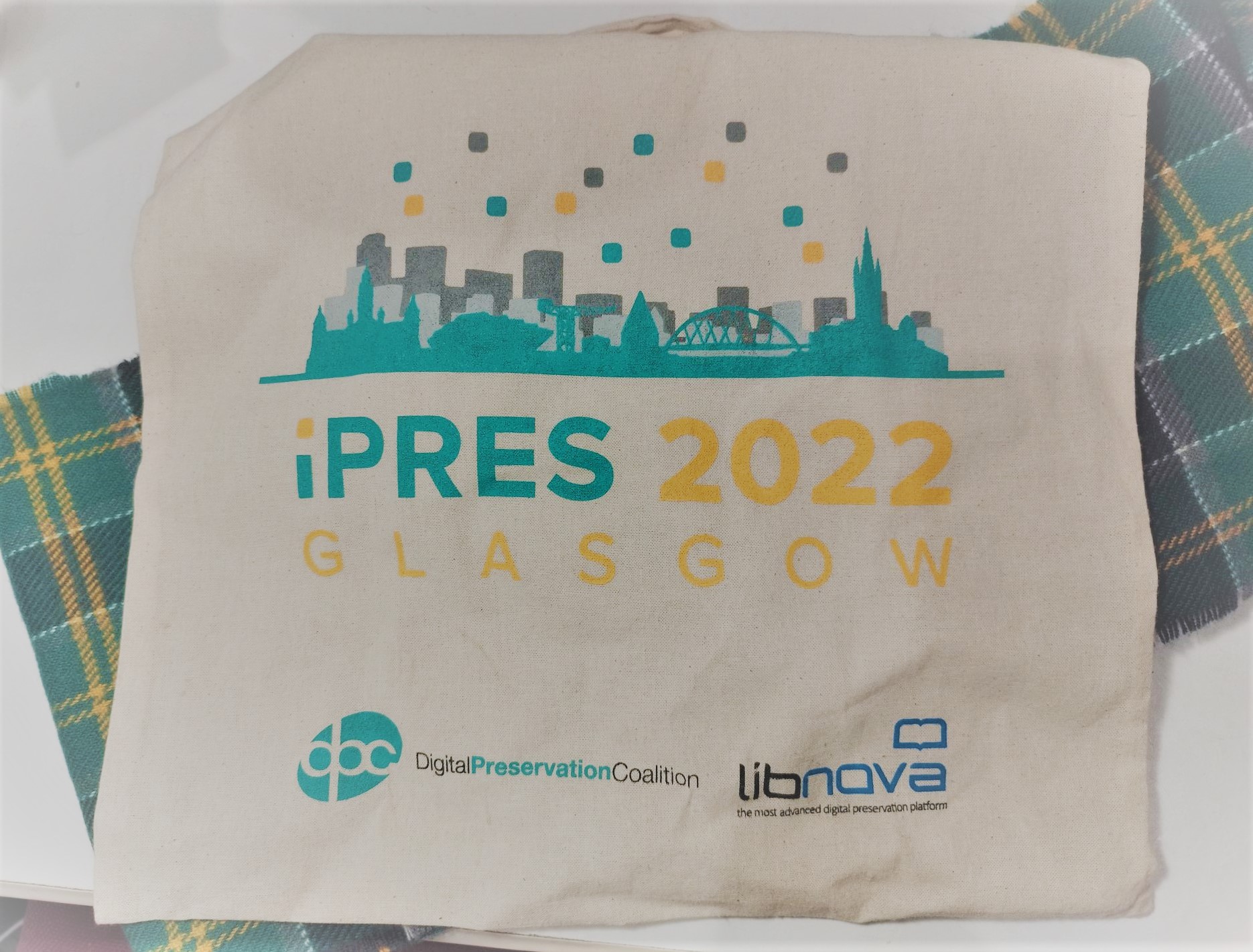
Souvenirs from iPRES: a tote bag and a tartan scarf in the DPC colour scheme
One session that skilfully interwove many of the ideas running through the conference was held on Thursday 15th as part of the Resilience strand. The session brought together archivists, researchers and experts from various Industries, which allowed for a multifaceted exploration of the obstacles posed by the preservation of complex digital resources connected to academia and the art world. The session touched upon a number of issues, from the threat that obsolete software poses to Internet art, to the importance of digital preservation strategies for academic research projects with a digital output and the application of web archiving to academic referencing.
The first two presentations highlighted the value of web archiving as a way to ensure the preservation of online resources used in academic research. Sara Day Thomson and Anisa Hawes’s talk focused on the website created as part of the Carmichael Watson Research Project, based at the University of Edinburgh. The website hosts an important online database of primary written resources and artefacts relating to Gaelic culture. Following the end of the research project, the website was taken down owing to security issues caused by its infrastructure. Day Thomson and Hawes were involved in the complex task of archiving this very large online database using Webrecorder.
Without the web archivists’ intervention, the Carmichael Watson Project website would have simply vanished. The presentation made a case for the development of digital preservation strategies, which should be viewed as a priority by academic institutions whose research output includes important digital archives and databases. Equally, this case study sparks questions about whether web archiving is the sole and most viable solution for the preservation of digital archives and databases. Does the website – its structure and the way in which it displays the database – matter and is therefore worth preserving for its cultural and evidential value, or could the research output be separated from the website and preserved through other means?
Martin Klein’s (Los Alamos National Laboratory) paper on Reference Rot presented another issued posed by the ubiquity of the internet in academic writing and publishing. As the number of scholarly resources available solely in electronic formats grows, so too does the amount of bibliographic citations that include a URL. Yet these links are easily broken. Many of us will have experienced the disappointment of clicking on a hyperlink only to find that the resource is no longer available on that webpage. Fewer will know that this phenomenon has its own nickname: content drift, which exposes URLs to link rot. Luckily, Klein’s project has devised an automatized programme for the creation of what he described as ‘robustified links’. In this way, it is possible to create an archived version of a URL, along with a unique resource identifier that includes information about date and time of creation of this robust link.
Both presentations offered me a new perspective on the work that I do at the Bodleian, where I help manage the Bodleian Libraries Web Archive. I often wonder who the current users of our web archive may be and what value this collection of websites may acquire in decades from now. The two talks made me appreciate the growing recognition of web archiving as a form of preservation of digital heritage as well as the value that these archived resources have for different stakeholders.
The second half of the session turned from academia to the art world, with papers by Natasa Milic-Frayling (IntactDigital Ltd) and Dragan Espenschied (Rhizome). The two papers explored some of the challenges faced by the preservation of Internet art. Both talks were interesting for the historical perspective they offered on recent developments in the art world such as NFT artworks, which may eventually find their way in a contemporary artist’s archive. As Milic-Frayling pointed out, the internet opened up a world of possibilities for emerging artists in the 1990s. Thanks to the web, artists could reach new audiences online without the mediation of art galleries and exhibitions. Yet the dissemination of artworks in the online environment has exposed them to the insidious threat of software obsolescence.
Espenschied showed the valuable work that Rhizome’s platform ArtBase has done to counter this issue. Active since 1999, this archive of Internet art employs various pieces of software to handle obscure data formats used by artists in the 1990s and allows users to perform the artefact choosing from different options, such as browser emulation or a web archived version of the artwork.
Milic-Frayling talked about her recent collaboration with artist Michael Takeo Magruder. Some of his Internet art pieces were created using Flash and VRML (Virtual Reality Modelling Language), both of which are no longer supported by today’s browsers. At first, it may be difficult to comprehend how a piece of software can negatively affect a work of art. Conservation issues affecting analogue archival material – from the threat of humidity and bookworms for a rare printed book to the excessive exposure to light for a delicate drawing – are tangible and visible. Yet software obsolescence should be taken just as seriously for the way in which it affects the born-digital counterparts to works on paper. In Magruder’s net art piece World[s], the combination of FLASH and VRML contributes to the creation of mesmerizingly intricate three-dimensional virtual shapes floating through a dark space. If the software is not correctly read, the integrity and quality of the artwork are endangered and potentially lost forever. Milic-Frayling worked to ensure the preservation of these net art pieces, guided in her approach by the artist’s requirements around access to and display of his artworks.
Together, the four talks contributed to show that born-digital resources are fragile and especially vulnerable to obsolescence. Yet the picture they painted was far from bleak. The speakers also made a case for the resilience of digital heritage, which owes much to the work that digital preservation specialists do to ensure that born-digital complex objects adapt to constant technological advancement and continue to be accessible to future generations.
Some useful links:
Digital Preservation Coalition – https://www.dpconline.org/
Webarchiving with Webrecorder – https://webrecorder.net/tools#archivewebpage
Wednesday 22 June 2022 is Windrush Day in the United Kingdom, celebrating the contributions of Afro-Caribbean migrants and their descendants to British culture, economy and society. The day is also a call to acknowledge and reflect on the hardships and sacrifice endured by the huge number of brave people who responded to the British call to colonies to migrate to Britain, assist in her recovery from World War Two and build a life here.
To mark Windrush Day, we thought we would have a look in our Archives and Modern Manuscripts to highlight some items related to the ship H.M.T. Empire Windrush, and the 70 year anniversary of 2018.
H.M.T. Empire Windrush
The first generation of settlers arrived in Tilbury Docks, 22 June 1948, aboard the Empire Windrush ship (previously called ‘Monte Rosa’, before the British renamed it). On this Caribbean journey the ship picked up passengers in Trinidad, Jamaica, Cuba, Mexico and Bermuda. Reports of numbers of arrivals on that first day vary between 500-1000 Caribbean men and women, but immigration from the colonies continued into the 1950s whereby the new British citizens who had travelled aboard H.M.T. Empire Windrush to their new home numbered tens of thousands. Many were servicemen or ex-servicemen.
In 2016 the John Johnson Collection of Printed Ephemera received the donation of the Sayers Collection of Ocean Liner Ephemera, which holds some material relating to the ship’s other voyages.
After being claimed as a war prize by the British at the end of the Second World War in 1945, the H.M.T. Empire Windrush still operated as a troopship, at a hefty 14651 tons. Image credit: Sayers Collection of Ocean Liner Ephemera, WP37 Empire Windrush RP troopship
An order for a Divine Service given on board, 30 Oct 1949. Image Credit: Sayers Collection of Ocean Liner Ephemera, ZB19 Empire Windrush Divine Service
‘The Black House’, 1973-1976, photographic series by Colin Jones
Photojournalist Colin Jones, together with journalist Peter Gillman of the Sunday Times, created a photo-series focused on a community hostel run by Caribbean migrant Herman Edwards at 571 Holloway Road, London during the 1970s. The hostel was a refuge for young black British people who were victims of prejudice, unemployed and had problems with the law. The name of the series comes from the name given to the hostel by those who frequented the halfway house, officially named ‘Harambee [Swahili for ‘pulling together’]’, who knew it as ‘the Black House’. Jones and Gillman set about to create a photographic record of everyday life in the house. The story of the series of the British Caribbean adolescents is ‘one of the most profound portraits of Black urban life in Seventies Britain’.[1]
The Bodleian holds a printed copy of the original 24 page music score for Psalm for Windrush: for the Brave and Ingenious, with words based on Psalm 84. In 2018, to mark the 70th anniversary of the arrival of migrants from the Caribbean aboard H.M.T Empire Windrush, Westminster Abbey held a service of thanksgiving and commemoration: ‘Spirit of Windrush: Contributions to Multicultural Britain’. This service also took place in the wake of the Windrush Scandal. The anthem of the service was Psalm for Windrush, written by British Jamaican composer and academic Shirley J. Thompson specifically for the commemoration of the Windrush Generation. Psalm for Windrush was performed for the first time at the Westminster service by sopranos Nadine Benjamin and Gweneth-Ann Rand, tenor Ronald Samm and Baritone Byron Jackson, accompanied by Peter Holder on the organ and directed by Thompson. This copy was printed in The Netherlands, as part of the Deuss Music Vocal Series.
Many of the British Caribbean migrants settled in London. London local authorities (as well as those further afield) charities, organisations and heritage institutions are holding arts events, hosting festivals, curating playlists and collating educational resources to engage with Windrush, the Windrush generation and descendants, and their lived experiences.
References:
[1] ‘Remembering Colin Jones’ Landmark Photographic Series The Black House’ 4 Nov 2021 Elephant Art accessed via https://elephant.art/remembering-colin-jones-landmark-photographic-series-the-black-house-04112021/
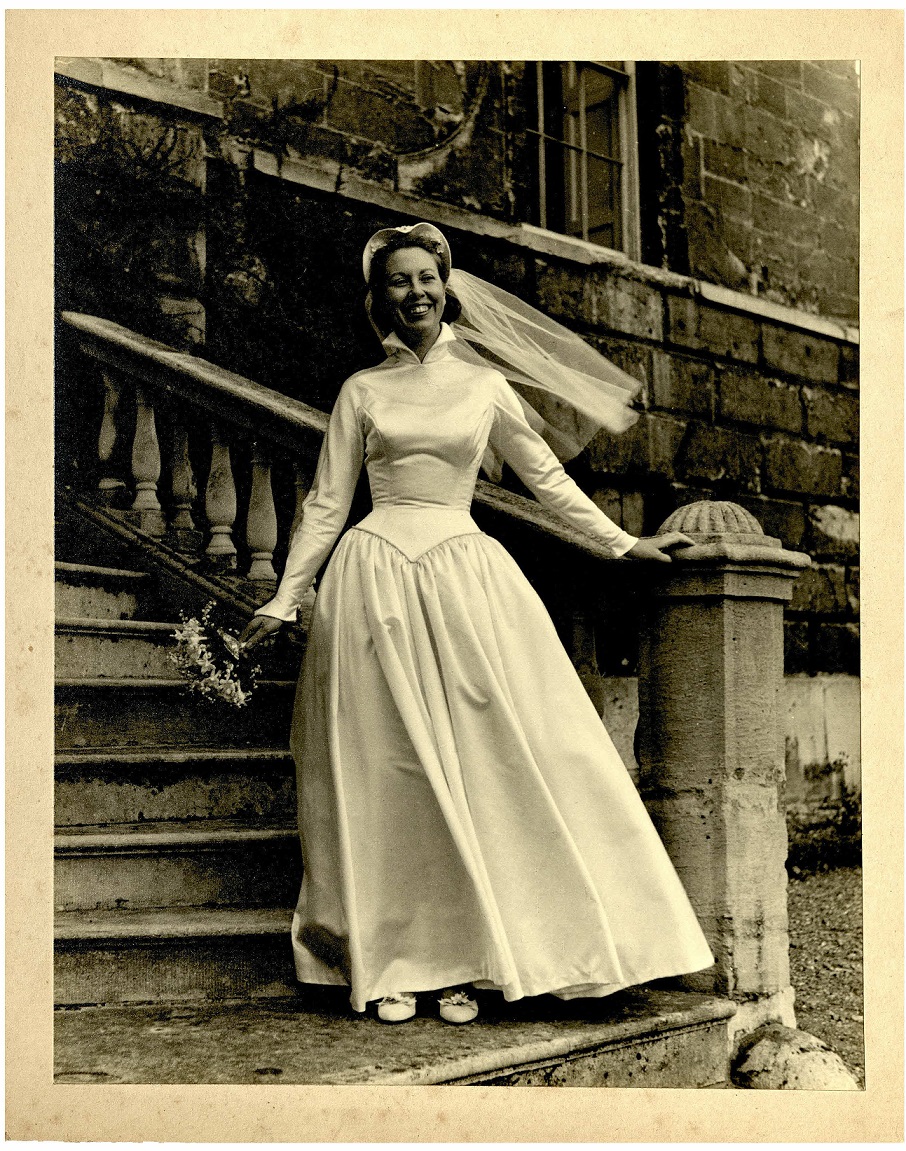
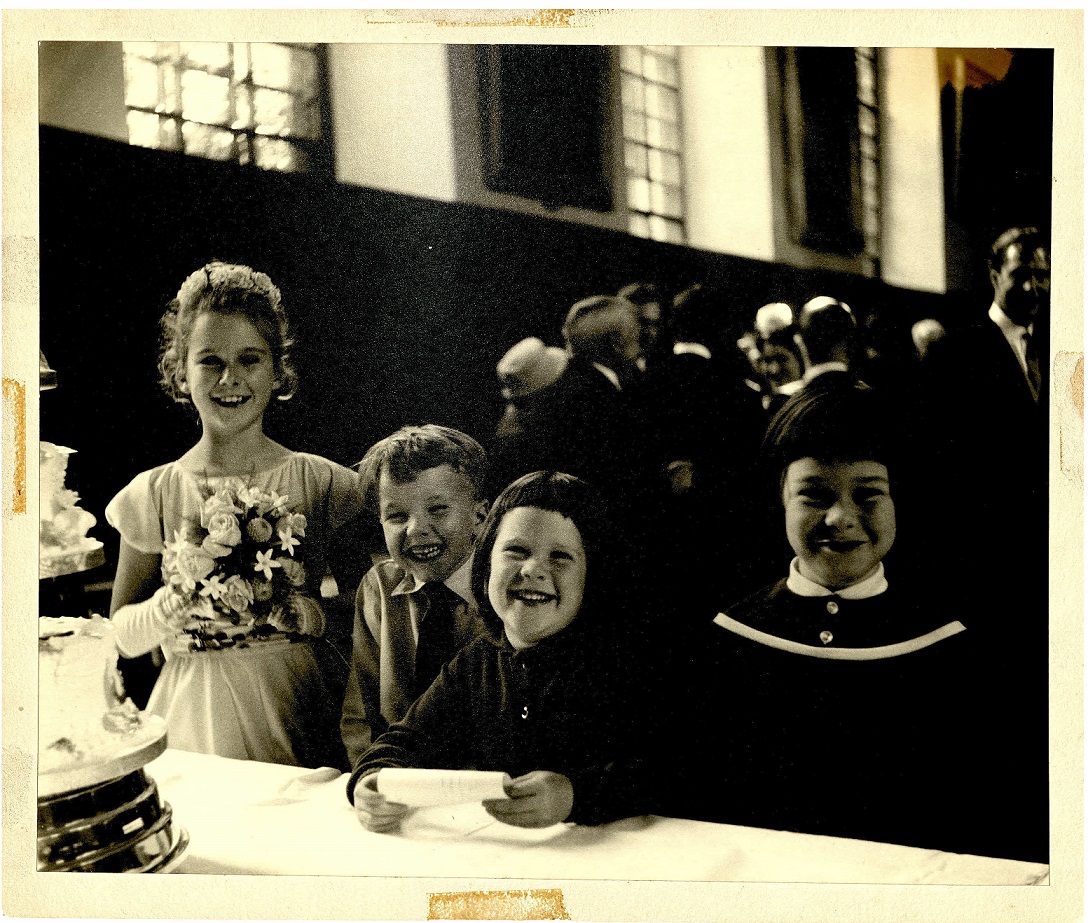
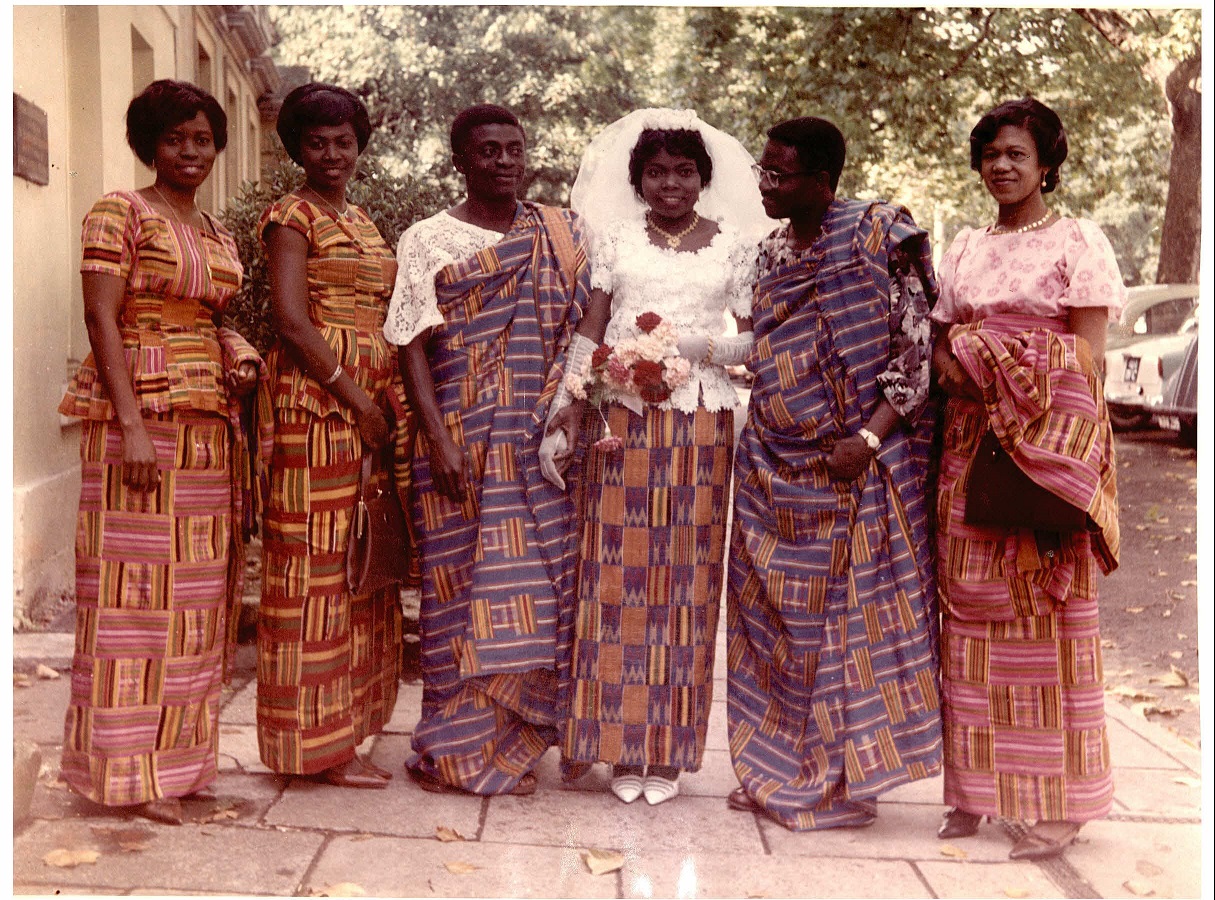
Helen Muspratt (1907-2001) was a skilled experimental and documentary photographer of the 1930s who produced haunting photographs of pre-war Russia and Ukraine as well as the Welsh valleys in the depths of the Great Depression. For most of her life, however, she was a hardworking studio photographer. From her studio on Cornmarket Street in Oxford she staged lively portraits of everyone who crossed the threshold, from playful toddlers to students celebrating degree days. And she was also a skilled wedding photographer, a job which consumed many Saturdays. Our collection of her wedding photographs spans the 1940s to the 1970s and showcases ordinary people, usually unnamed, in a beautiful array of wedding fashions.
There were three themes to this year’s conference: sustainability, diversity, and advocacy. Though each day of the conference covered one theme, one of the stand-outs of the conference was just how interlinked all three strands were.
Day one’s keynote speaker was Jeff James, Chief Executive and Keeper at The National Archives. Jeff talked about environmental sustainability, as well as the sustainability of the record and of the archives sector. He mentioned how The National Archives at Kew are committed to lowering their carbon footprint, which has been reduced by 80% since 2009. This has been achieved by building on scientific research with regards to buildings, bringing both a financial and environmental benefit. He also spoke of records at risk, referring to the work of the Cultural Recovery Fund, the Covid-19 Archives Fund for records at risk and the Crisis Management Team alongside already established fund streams such as the Archives Revealed grant scheme. Digital records were flagged as records at risk and he stressed the need for the sector to work in partnership and collaboration, both together and with digital giants (such as Microsoft and Google) with regards to developing digital products. Sector skills include the need for records professionals to gain digital skills through schemes and strategies such as Plugged In Powered Up, the Novice to Know-How online training resource created by the Digital Preservation Coalition, the Digital Archives Learning Exchange, and the Bridging the Gap traineeship programme.
The fragility of born-digital records, identified as critically endangered by the Digital Preservation Coalition, was a common theme throughout the conference. Even the most modern of records are at risk (CD-Rs for example, have a lifespan of under 10 years). Particular digital records discussed related to oral history interviews, often seen as ‘history from below’, recording the lives of those with ‘hidden histories’ off mainstream records, such as women and members of the LGBTQ+ community. Challenges to preserve digital material include cost, knowledge, skills and training, technology, and resources, as well as issues surrounding ‘gatekeeping’ and access to material. Rachel MacGregor (Digital Preservation Officer at The Modern Records Centre, University of Warwick) emphasised the need to record, describe, and catalogue born digital collections well in order to ensure that that they can be utilised by researchers, and explored some of the standards and guidance currently available.
Day two’s keynote speaker was Arike Oke (Managing Director, Black Cultural Archives) who spoke about experiences with diversity, aptly described as the equitable and mindful bringing together of difference; diversity should not be seen as static, but as a perpetual movement, both including and evolving difference. In her talk, Arike raised the point of classifying and being classified, and several sessions across the three days referred to how language and terminology impacted the use of records or archives created by or for particular communities. The use of historic terminology can be a barrier to access, particularly when words hold negative connotations that can cause distress to users. This was explored in several sessions in relation to LGBTQ+ related records and archives (including those kept at the Parliamentary Archives of the UK Parliament), as well as colonial collections such as the Miscellaneous Reports Collection held by the Royal Botanic Gardens in Kew. Thoughts on how to address the issues included guides or notes explaining the context and why such words were used, including modern terms or names in brackets, inviting feedback, and for events, giving participants time and space to process information.
The importance of being open to keeping more ephemeral material and objects (e.g. pin badges, leaflets and posters) was also highlighted, particularly in shedding light on lives not necessarily recorded in more traditional forms. Christopher Hilton of Britten Pears Arts gave an interesting presentation on the multitude of receipts kept by Benjamin Britten and his partner Peter Pears for tax purposes. The receipts were important in shedding light on their relationship by providing evidence that they maintained clearly separate financial lives, demonstrating how important it was for their professional lives at that period that their records could be used to demonstrate a ‘plausible deniability’ should their personal relationship be questioned. The receipts were also records of businesses in Aldeburgh which are now long gone, provoking memories for older residents and providing a tangible link between the archive and the town.
Day three’s keynote speaker was Deirdre McParland, Senior Archivist at the Electricity Supply Board (Ireland) whose inspirational talk focussed on the importance of advocacy and that ‘archives are for life, not just anniversaries’. Deirdre spoke of how archives should be pro-active and innovative when it comes to advocacy, and that projects should be strategically planned to include promotion as standard. Deirdre’s talk was followed by a talk by Jenny Moran and Robin Jenkins from the Record Office for Leicestershire, Leicester and Rutland, and Richard Wiltshire of the Crisis Management Team. Jenny, Robin and Richard talked about saving the archive of the travel firm Thomas Cook after the company’s sudden collapse: an excellent example of how swift action, negotiation and successful advocacy led to the ensured survival of the archive. The conference was nicely brought to a close by a talk by Alan and Bethan Ward on their project Photographs from Another Place. Their talk, given from the perspective of the archive user, showed how a bit of archival research revealed the names and stories behind a group of forgotten and unlabelled glass plate negatives. It was, for me at least, a timely reminder of the enduring value of archives.
A selection of further reading recommendations made by speakers and participants:
Every year, the international digital preservation community meets for the iPRES conference, an opportunity for practitioners to exchange knowledge and showcase the latest developments in the field. With the 2020 conference unable to take place due to the global pandemic, digital preservation professionals instead gathered online for #WeMissiPRES to ensure that the global community remained connected. Our graduate trainee digital archivist Simon Mackley attended the first day of the event; in this blog post he reflects on some of the highlights of the talks and what they tell us about the state of the field.
How do you keep the global digital preservation community connected when international conferences are not possible? This was the challenge faced by the organisers of #WeMissIPres, a three-day online event hosted by the Digital Preservation Coalition. Conceived as a festival of digital preservation, the aim was not to try and replicate the regular iPRES conference in an online format, but instead to serve as a bridge for the digital preservation community, connecting the efforts of 2019 with the plans for 2021.
As might be expected, the impact of the pandemic loomed large in many of the talks. Caylin Smith (Cambridge University Library) and Sara Day Thomson (University of Edinburgh) for instance gave a fascinating paper on the challenge of rapidly collecting institutional responses to coronavirus, focusing on the development of new workflows and streamlined processes. The difficulties of working from home, the requirements of remote access to resources, and the need to move training online likewise proved to be recurrent themes throughout the day. As someone whose own experience of digital preservation has been heavily shaped by the pandemic (I began my traineeship at the start of lockdown!) it was really useful to hear how colleagues in other institutions have risen to these challenges.
I was also struck by the different ways in which responses to the crisis have strengthened digital preservation efforts. Lynn Bruce and Eve Wright (National Records of Scotland) noted for instance that the experience of the pandemic has led to increased appreciation of the value of web-archiving from stakeholders, as the need to capture rapidly-changing content has become more apparent. Similarly, Natalie Harrower (Digital Repository of Ireland) made the excellent point that the crisis had not only highlighted the urgent need for the sharing of medical research data, but also the need to preserve it: Coronavirus data may one day prove essential to fighting a future pandemic, and so there is therefore a moral imperative for us to ensure that it is preserved.
As our keynote speaker Geert Lovink (Institute of Network Cultures) reminded us, the events of the past year have been momentous quite apart from the pandemic, with issues such as the distorting impacts of social media on society, the climate emergency, and global demands for racial justice all having risen to the forefront of society. It was great therefore to see the role of digital preservation in these challenges being addressed in many of the panel sessions. A personal highlight for me was the presentation by Daniel Steinmeier (KB National Library of the Netherlands) on diversity and digital preservation. Steinmeier stressed that in order for diversity efforts to be successful, institutions needed to commit to continuing programmes of inclusion rather than one-off actions, with the communities concerned actively included in the archiving process.
So what challenges can we expect from the year ahead? Perhaps more than ever, this year this has been a difficult question to answer. Nonetheless, a key theme that struck me from many of the discussions was that the growing challenge of archiving social media platforms was matched only by the increasing need to preserve the content hosted on them. As Zefi Kavvadia (International Institute of Social History) noted, many social media platforms actively resist archiving; even when preservation is possible, curators are faced with a dilemma between capturing user experiences and capturing platform data. Navigating this challenge will surely be a major priority for the profession going forward.
While perhaps no substitute for meeting in person, #WeMissiPRES nonetheless succeeded in bringing the international digital preservation community together in a shared celebration of the progress being made in the field, successfully bridging the gap between 2019 and 2021, and laying the foundations for next year’s conference.
#WeMissiPRES was held online from 22nd-24th September 2020. For more information, and for recordings of the talks and panel sessions, see the event page on the DPC website.