Category Archives: Sciences

Reflections on Curating in the Crossfire: Collecting in the Time of War, Conflict and Crises

On 3-4 November, I attended a two-day event at the British Library that highlighted the challenges and approaches of collecting materials created during times of war, conflict and crises. Through a series of panels and discussions, museum and library professionals, researchers and private collectors shared examples of incredible historical and contemporary initiatives to preserve diverse materials and heritage sites at risk of loss, decay or destruction.

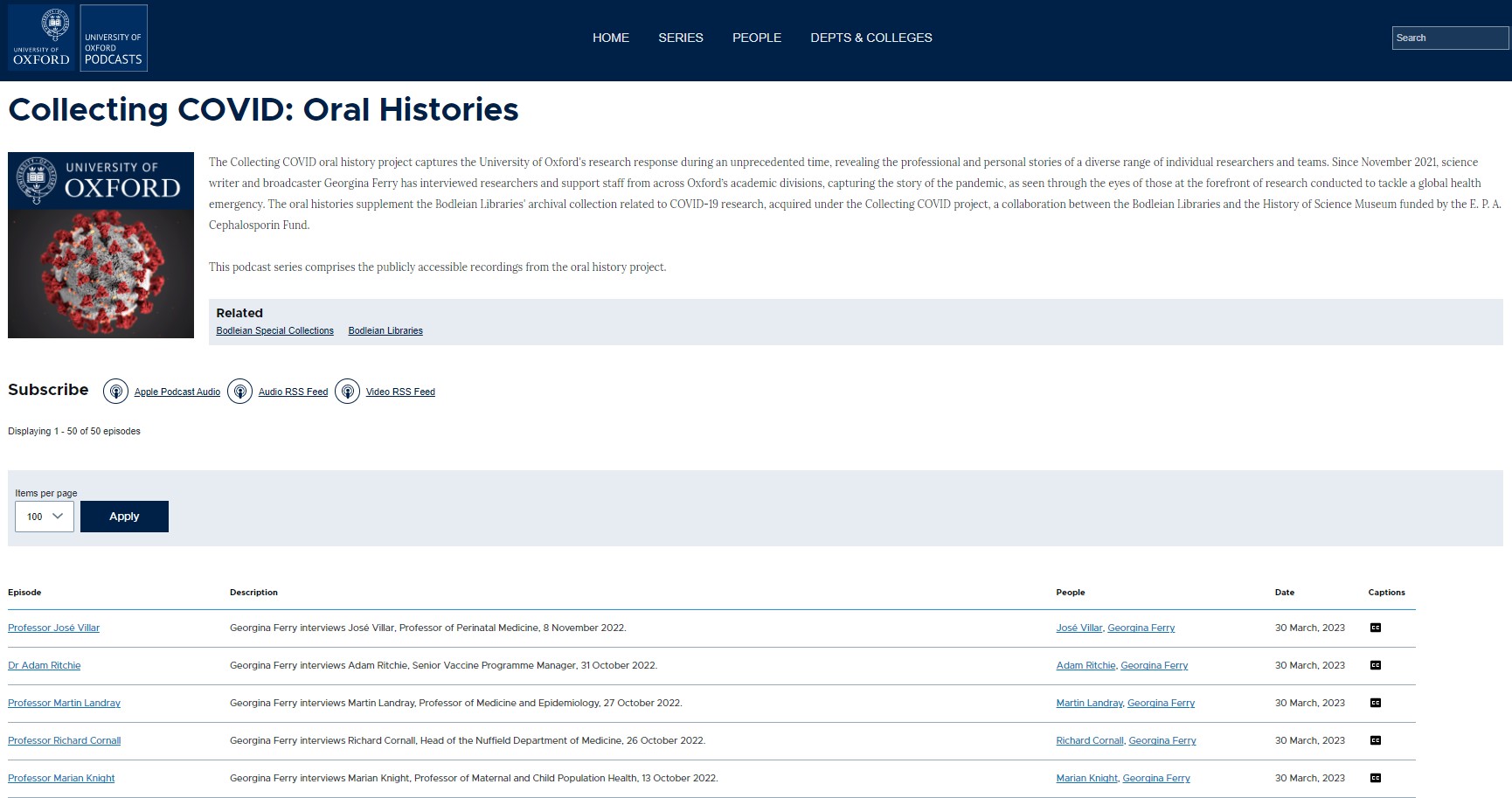
Having recently worked on the joint Bodleian Libraries and History of Science Museum Collecting COVID project, I was particularly interested in contemporary programmes of collecting. Our project, which ran from 2021-2023, aimed to acquire and preserve the University of Oxford’s research response to the COVID-19 pandemic. It enabled us to capture, catalogue and publish over ninety oral history interviews.

Modern collections/initiatives showcased included:

  • Web Archiving the COVID-19 pandemic, Nicola Bingham, British Library
  • Coastal Connections (heritage sites at threat from coastal erosion) Dr Alex Kent, World Monuments Fund)
  • Crowdsourcing photographs for the Picturing Lockdown Collection Dr Tamsin Silvey, Historic England
  • Endangered Archives Programme (recent case studies include Ukraine, Gaza and Sudan) Dr Sam van Schaik, British Library
  • Collecting Human Stories during the war in Ukraine, Natalia Yemchenko, Rinat Akhmetov Foundation/Museum of Civilian Voices

Rapid collecting is a means to collect documentary evidence, preserve cultural memories and commemorate events. By providing access to these collections, institutions are then able to build a body of evidence and facilitate research. I was struck by the similarities between modern initiatives and those that had taken place a century before. Some of the contemporary examples of collections crowdsourcing harked back to the collecting of ephemera during the First World War. Dr Ann-Marie Foster highlighted the Bond of Sacrifice Collection and Women’s Work Collection (Imperial War Museums) in her presentation with Alison Bailey, in which families sent items memorialising loved ones, as examples of early collecting initiatives. Modern rapid collecting work has meant that contemporary archivists/curators have taken up this tradition, working actively to save materials at risk of loss through intentional selection.

As well as crowdsourcing and outreach, other strategies institutions draw upon in an increasingly online world are web archiving, digitisation and digital preservation. With social media now a main mode of communication for millions, web archiving is a useful tool to preserve and present online response to global events. Work to capture websites relating to recent events is ongoing at both the Bodleian Libraries and British Library. I found Archive-It to be an incredibly useful tool to capture and publish a range of web pages (including the social media pages of COVID-19 researchers, given with permission) for our project, which without reactive selection and preservation, would otherwise have been at risk of loss.

Overall, the event highlighted that institutions must use active strategies towards preserving at-risk materials created during ongoing crises and conflicts, including:

  • Involving communities to assist in selection of materials;
  • Providing as representative a view of the event as possible (capturing diverse perspectives);
  • Providing access to collections and making them available as widely as possible (ethical considerations and sensitivities permitting);
  • Democratising collections and preserving them for future generations.

Algorithmic Archive Project: Use Cases (3/3)

The Algorithmic Archive project is a one year project funded by the Mellon Foundation. As part of the first Work Package, we explored how researchers from different disciplines use social media data to answer various research questions.

This post is the third in a three-part series presenting use cases drawn from research conducted as part of the Algorithmic Archive project.

We would like to thank the researchers who generously shared insights from their work.


Use Case – Study on the trustworthiness of social media visual content among young adults (TRAVIS project)[1]

Research questions and aim(s):

Trust And Visuality: Everyday digital practices (TRAVIS) is an ESRC project which has received funding from the European Union’s Horizon 2020 Research and Innovation Programme. This research project that looks at how young adults experience, build and express trust in news and social media images related to wellbeing and health. It explores how and why people trust some visuals over others and how content creators establish trustworthiness through visual content. The TRAVIS project involves cross-national collaboration of multiple research teams located at different universities in UK and Europe. This includes the University of Oxford, in particular the Oxford team is based School of Geography and the Environment.

Social media data used:

The project included data collected indirectly from platforms including Facebook, Instagram, TikTok and YouTube (see below).

Tools and methods adopted:

Data collection from social media consisted of screenshots taken from the devices of interviewed young adults, as the TRAVIS project investigates the meaning of social media posts (visual content) via interviews with young adult users. The datasets generated from this method of collection counts around 400 screenshots, stored on an institutional cloud drive, which is accessible by the whole team.


[1] Further information about the TRAVIS project are available here: https://www.tlu.ee/en/bfm/researchmedit/trust-and-visuality-everyday-digital-practices-travis

Algorithmic Archive Project: Use Cases (2/3)

The Algorithmic Archive project is a one year project funded by the Mellon Foundation. As part of the first Work Package, we explored how researchers from different disciplines use social media data to answer various research questions.

This post is the second in a three-part series presenting use cases drawn from research conducted as part of the Algorithmic Archive project.

We would like to thank the researchers who generously shared insights from their work.


Use Case – Exploring Algorithmic Mediation and Recommendation Systems on YouTube [1]

Research questions and aim(s):

The study sought to investigate how the YouTube platform operates, focusing on algorithmic activity and the strategies employed by both human and automated (robot) actors within federal and regional elections. The aim was to understand the impact that this system of mediation has on society and to demystify preconceptions of ideologically neutral technologies in highly disputed political events. The research focuses on two case studies: 1) the 2018 Ontario (Canada) election and 2) the 2018 Brazilian Federal Election. The data collection was carried out during the campaigning periods, between May and June in Ontario, and between August and October 2018 in Brazil.

Social media data used:

The research focussed on the sole YouTube platform. Specifically, the researchers collected information about recommended videos starting from specific keywords related to the election campaign.

Tools and methods adopted:

The data collection was carried out using a Python script developed by the Algo Transparency project. The script automates YouTube search operations based on specified keywords (e.g., the names of the candidates), allowing the researcher to gather video-related data and the relative ranking position displayed to the user. Once the keywords were defined, the tool retrieved links for the top four results for each keyword and then examined the recommendation section. This process was repeated four times, each time collecting recommended videos, simulating a user interacting with algorithmic suggestions.

Data collected was stored on personal devices and the institutional cloud, and can be visualized at the following links:


[1] Reis, R., Zanetti, D., & Frizzera, L. (2020). A conveniência dos algoritmos: o papel do YouTube nas eleições brasileiras de 2018. Compolítica10(1), 35–58. https://doi.org/10.21878/compolitica.2020.10.1.333

Algorithmic Archive Project: Use Cases (1/3)

The Algorithmic Archive project is a one year project funded by the Mellon Foundation. As part of the first Work Package, we explored how researchers from different disciplines use social media data to answer various research questions.

This post is the first in a three-part series presenting use cases drawn from research conducted as part of the Algorithmic Archive project.

We would like to thank the researchers who generously shared insights from their work.


Use Case: Network/cluster analysis to investigate the construction and influence of information trustworthiness within social movements on Twitter [1]

Research questions and aim(s):

The researcher wanted to explore the construction and influence of information trustworthiness within social media movements in the context of the Hong Kong protests and the #BlackLivesMatter movements. Social media platforms offer a digital space for social movements to facilitate the diffusion of critical information and the formation of networks, coordinating protests and reach a wider audience.

Social media data used:

This study focused on Twitter as it was used evenly by both social movements, and the researcher already had an established presence on this platform. Also, at the time of data collection (2020-2021), access to Twitter data for academic research was still relatively open to researchers.

For the purpose of this study, the researcher examined the follow and followers’ relationship of top accounts counting millions of followers that had been selected as big information disseminators, including organisations, individuals or accounts serving a particular niche or purpose.

Data collection was conducted at a specific point in time in 2021. Social media data quantitative analysis (e.g. cluster analysis) was complemented with qualitative data collected via an online survey.

Tools and methods adopted:

The researcher requested and obtained access to the Twitter API. However, high-level coding skills were required to access the data, which the researcher did not have at that time due to their predominantly qualitative research background. To address this, the researcher found and used a Go script called Nucoll[2], which is freely available on GitHub and enabled the researcher to collect the required data. Nucoll is a command-line tool that, according to its developer, retrieves data from Twitter using keyword instructions, for which the developer provided example queries and brief explanations. For each social movement, the researcher selected three organisations: one large organisation, one activist group, and one additional account that was relevant to the movement. Once these accounts were selected, they were processed through the script to capture all following/follower relationships and combine them into a graph for each protest analysed. Further data visualisation and analysis — including clustering and network analysis — were conducted using Gephi.


[1] Charlotte Im, The Construction and Influence of Information Trustworthiness in Social Movements, Doctoral Thesis, University College London (UCL), 2024.

[2] https://github.com/jdevoo/nucoll

The Algorithmic Archive: a project overview

What is the Algorithmic Archive Project?

In 2024, the Algorithmic Archive Project has received funding from the Mellon Foundation to carry out scoping research that will ultimately support the Bodleian Libraries in the development of a lasting, interoperable infrastructure and sustainable strategies for archiving web-based data, including social media data and algorithms. The project is part of the broader Future Bodleian programme aiming to expand and evolve its centuries-old role by engaging with the digital domain.

Why archive social media data?

In the past two decades, social media platforms have become a central means of communication, enabling people from across the globe to engage in discussions that transcend geographical borders, reflect on contemporary events and contribute to collective memory. Given their profound impact on society, researchers across various disciplines increasingly rely on social media data to analyse social, economic, and political phenomena. However, social media data is inherently ephemeral, subject to continuous evolution driven by changes in platform leadership, economic gain, and shifting policies. For this reason, it is essential to preserve and provide reliable and sustainable access for the (re)use of such an important resource.

Steps towards the development of a social media and algorithmic data service.

The Algorithmic Archive project is articulated in four interconnected phases aimed to investigate the research, archiving, legal and technical landscape to inform the Bodleian Libraries’ future development of a social and algorithmic data service.

The image below offers a visual summary of the work packages that the Research Officers have been exploring over this one-year project.

In upcoming blog posts, we will present some of the results and highlight use cases drawn from research conducted with social media data.

Reporting from the Born-Digital Collections, Archives and Memory Conference 2025

Between 2-4 April 2025, I attended the very first edition of the Born-digital Collections, Archives and Memory conference, together with my colleague from the Algorithmic Archive Project, Pierre Marshall. The conference was co-organised by the School of Advanced Study at the University of London, the Endangered Material Knowledge Programme at The British Museum, The British Library and Aarhus University. This international event offered the unique opportunity to bring together academics and practitioners from diverse disciplines, career paths and backgrounds to explore the transformative impact of born-digital cultural heritage. The diverse range of research, methodologies, and practices presented in this year’s programme offered valuable insights and reflections, particularly relevant to the Algorithmic Archive project and its goal of developing sustainable, persistent approaches to preserving born-digital heritage created on the web, especially on social media platforms.

The inspiring opening keynote by Dorothy Berry, Digital Curator at the Smithsonian National Museum of African American History and Culture, highlighted the vital importance of preserving ephemeral and fragile forms of born-digital heritage (such as social media) —many of which have increasingly replaced traditional modes of memory-making, also drawing attention to the pressing need for a deeper understanding of what and how born-digital memory should be preserved. In particular, she stressed the need to record the “full context” in which born-digital records and materials were embedded before being collected and included in specific collections. However, she also highlighted the challenges many memory institutions face due to uneven resource distribution, an issue that may hinders both the development and long-term sustainability of innovative preservation efforts.

Given the richness of the BDCAM25 program, it is incredibly difficult to summarise the many takeaways from the three-day conference. Nevertheless, it is worth highlighting sessions such as the one exploring the history, socio-technical dynamics and research conducted on corpora from platforms such as Usenet; the important reflections stemmed from a study conducted by Rosario Rogel-Salazar and Alan Colín-Arce exploring the presence of feminist organisations in web archives; and the research conducted by Dr Andrea Stanton exploring Palestine and the concept of Palestinian heritage through the analysis of accounts and hashtags on Instagram. 

Particularly valuable insights came also from Dr Kieran Hegarty’s paper, which explored the challenges posed by the unpredictable and frequent changes to platform design and policies, underscoring how this significantly influence what is included in web archives and how the material is made available.

Beveridge Hall entrance, Senate House, University of London. Photo taken by B. Cannelli

Overall, the conference provided a valuable opportunity to learn about new research and to network with scholars and practitioners from around the globe. During lunch and coffee breaks, I had insightful conversations with several delegates about the challenges of preserving born-digital materials, particularly data generated on social media platforms. We exchanged ideas and reinforced the importance of developing shared practices to safeguard these resources. This theme strongly resonated in the closing session, which brought together voices from diverse career paths and regions to reflect on the current state of born-digital archives, collections, and memory, and to identify future directions.
Among the key takeaways were the need to foster data literacy and building digital citizens from a young age, as well as the importance of connecting with activists and minority communities to help them tell and preserve their stories.

Catalogue of the Dictionary of Medical Eponyms by Austin Seckersen is now available

This collection comprises material collected by Seckersen for a dictionary of medical eponyms. The dictionary was never published. It also includes a set of glass negatives of portraits of those whose names have been used as an eponym.

Catalogue of the Dictionary of Medical Eponyms by Austin Seckersen

The Flying Machine of Hiram Maxim

On Tuesday 31st July 1894 the American-born inventor and engineer Hiram Maxim (1840-1916) was testing the latest version of his flying machine at his home, Baldwyn’s Park near Bexley in Kent. He had laid out a steel track, 1800 feet in length, in order to run the machine in a straight line between the trees of the Park.

Photograph of Hiram Maxim's flying machine in the grounds of Baldwyn's Park, c.1894.
Hiram Maxim’s flying machine in the grounds of Baldwyn’s Park, c.1894. MS. 21798, file 4. Click to enlarge.

On the final attempt of the day, having increased the pressure of the machine’s steam boiler, the wheels rose from the track and it flew for eight seconds at a speed of 45 miles per hour before crashing to the ground. The flying machine weighed more than three tons. Maxim was on board along with two mechanics, Arthur Guthrie and Thomas Jackson.

Should this be recognised as the first heavier-than-air flight, nine and a half years before the Wright brothers’ flight at Kitty Hawk, North Carolina, on 17 December 1903?

Photograph of the flying machine after crash landing, 31 July 1894
The flying machine after crash landing, 31 July 1894. MS. 21798, file 4.

William McGregor Ross (1876-1940), a young admirer of Maxim who also became an engineer, thought that Maxim’s achievement had not received the recognition it deserved. He used every opportunity to correct this and a collection of papers and photographs, recently donated to the Bodleian by his grandson, records the efforts he made until the end of his life. William was educated at Southport Grammar School and began keeping a diary from an early age, recording in meticulous detail and tiny handwriting the events of his daily life. His diary of 1892, when he was 16 years old, reveals his interest in flying machines and in August he wrote to Hiram Maxim asking for advice on screw propellers.

William McGregor Ross's diary entry for 30 August 1892, describing the receipt of a letter from Hiram Maxim.
William McGregor Ross’s diary, 30 August 1892, MSS. Afr. s. 2305, box 1, item 3

Maxim replied (sending ‘several wrinkles’, i.e. tips or hints) and a lifelong friendship developed between them with Maxim and his wife Sarah supporting William’s interest in engineering, which he went on to study at Liverpool and Dublin Universities. In September 1892 William was invited to visit Baldwyn’s Park where he saw the development of the flying machine which Maxim had been working on for a year, eventually testing the thrust of over 200 types of propeller before the flight in 1894.

William McGregor Ross's diary entry for 5 September 1892, describing an invitation to visit the Maxims at Baldwyn's Park.
William McGregor Ross’s diary, 5 September 1892. MSS. Afr. s. 2305, box 1, item 3

William’s diary entry for 15 September 1892 records the running of the machine on the track through the Park, reaching a speed of 27.5 miles an hour. He notes that photographs were taken after the experiments and the donation to the Bodleian includes one of the photographs of young William together with Hiram Maxim on board the flying machine.

William McGregor Ross's diary entry for 15 September 1892, describing the testing of the flying machine.
William McGregor Ross’s diary, 15 September 1892. MSS. Afr. s. 2305, box 1, item 3

Photograph of William McGregor Ross and Hiram Maxim on the flying machine, 15 Sep 1892.
William McGregor Ross and Hiram Maxim on the flying machine, 15 Sep 1892. MS. 21798, file 4.

William did not witness the short flight in 1894 – his diary records that he was in Southport on the day – however his interest in flying machines continued as evidenced by a letter full of questions to Mrs Maxim in February 1899.

                 Letter from William McGregor Ross to Mrs Maxim, 9 Feb 1899. MS. 21798, file 2, click images to enlarge

Maxim continued to develop his machine but came to realise that powering it by steam, requiring boilers and water, added excessive weight and his experiments came to an end.

Following Hiram Maxim’s death in 1916 William continued to correspond with Sarah Maxim and in 1934 made particular efforts to have the 40th anniversary of the flight recognised, writing to the national press, scientific journals, the BBC and film companies. He repeatedly argued that any history of aviation excluding Maxim’s role in the development of heavier-than-air flight was incomplete and pointed out that he held the altitude and duration records for 9 years and 139 days and the weight record for even longer. The newly available papers present William’s observations on the remarkable events at Baldwyn’s Park on their 130th anniversary.


Sources

Oxford, Bodleian Libraries, MS. 21798: Papers of William McGregor Ross relating to Sir Hiram Maxim and his flying machine

Oxford, Bodleian Libraries, MSS. Afr. s. 1178, 1876 and 2305: Papers of William McGregor Ross and Isabel Ross

Kafka24: Oxford celebrates Franz Kafka

Kafka24 logo featuring a photograph of Franz Kafka's faceTo commemorate the centenary of Franz Kafka’s death on 3 June 1924, the University of Oxford’s summer-long cultural festival Kafka24,  inspired by Kafka’s life and work, features theatre, music, cabaret, exhibitions, lectures, talks, and free family activities including the spectacular Jitterbug Tent which will land in University Parks on South Parks Road from Friday 31st May to Sunday 2nd June, and insect activities at the Museum of Natural History on the evening of 5th June.

On the evening of 3rd June, the Bodleian Libraries will host Oxford Reads Kafka in the historic Sheldonian Theatre, a public reading of Kafka’s story ‘Metamorphosis’ in which the hapless Gregor Samsa wakes up to find he’s transformed into a bug, with readers including authors Lemn Sissay, Ben Okri, and Lisa Appignanesi (tickets available online).

And on 30 May the major exhibition Kafka: Making of an Icon, featuring manuscripts from the Bodleian Library’s Kafka archive, opens in the ST Lee Gallery of the Weston Library (free admission).

The full programme of lectures and events is at www.bodleian.ox.ac.uk/kafka24.

The catalogue of the archive of Dr Emilie Savage-Smith – available soon!

Dr Emilie Savage-Smith is a historian of science specialising in Islamic celestial globes. Islamic celestial globes are spherical maps of the sky that give the viewer a ‘God’s’ eye view of the stars and constellations, with Earth at the centre, originating from lands where Islam was the predominant religion.

Celestial globe

Savage-Smith graduated from DePauw University in 1962 and completed her Ph.D. at the University of Wisconsin-Madison in 1969. She was professor of the History of Islamic Science in the Faculty of Oriental Studies at the University of Oxford from 2006 to 2019, and a fellow and archivist of St Cross College, Oxford, 2004-2021.

She has authored several books, including Islamicate Celestial Globes: Their History, Construction and Use, 1985. She was named a fellow of the British Academy, 2010, and the Medieval Academy of America, 2020.

Celestial globe

This collection is the largest research archive of material on Islamic celestial globes in the world, with over two-hundred globes and instruments dating back to 1080 featured. It comprises her papers, photographs and drawings collected over the course of her career. Her collection of objects was donated to the History of Science Museum.

This collection will be available soon.

Catalogue of the archive of Dr Emilie Savage-Smith

Science in the Islamic World | History of Science Museum